Load and Equipment Selection
A Manual J load calculation evaluates heat gain and heat loss. The results guide system capacity, while efficiency ratings and staged or variable-capacity operation help narrow the equipment choices.
Serving Opelika, Alabama & surrounding areas
AC installation service in Opelika
Get a properly sized cooling system, a clear installation plan, and dependable indoor comfort through Alabama's hot, humid weather.
Plan around the home, not only the equipment
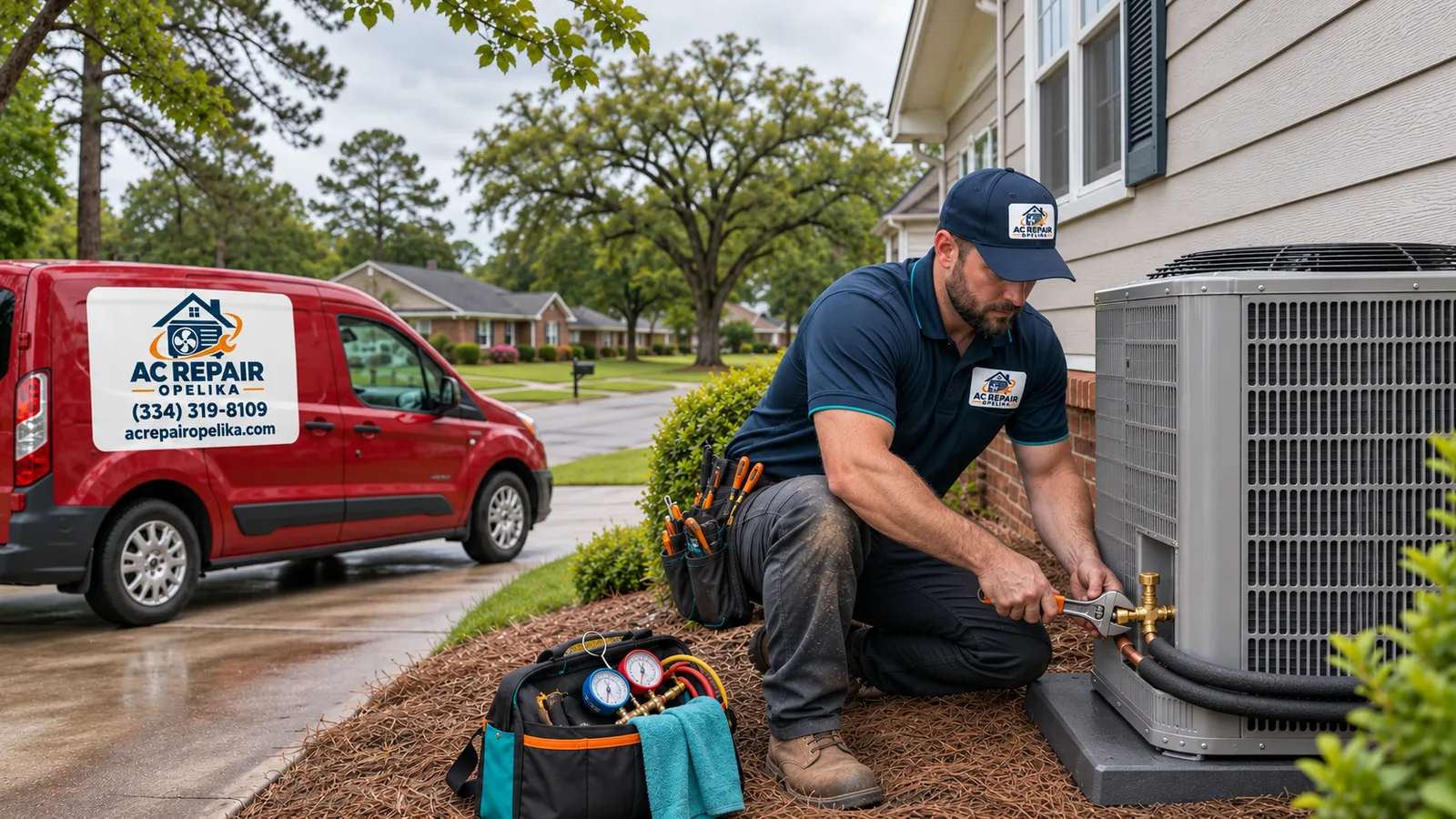
Professional ac installation Opelika AL homeowners can rely on begins with the house, not the equipment label. Floor area matters, but so do insulation, windows, ceiling height, air leakage, duct condition, sun exposure, and the number of people using the home. A system selected without this information may cool unevenly, run longer than expected, or remove too little humidity.
AC Repair Opelika approaches each project by identifying the cooling load and checking whether the existing electrical service, refrigerant lines, drain route, return-air path, and ductwork can support the proposed equipment. Before installation, Opelika's local ac service explains the scope and discusses any related work that affects performance. Homeowners receive practical recommendations based on the building rather than an automatic replacement with the same capacity.
Opelika's long cooling season and humid summer air make moisture control an important part of equipment selection. Oversized equipment can satisfy the thermostat quickly and shut off before completing an effective dehumidification cycle. Correct sizing supports steadier operation, better humidity removal, and more consistent temperatures between rooms.
Evaluate the complete matched system
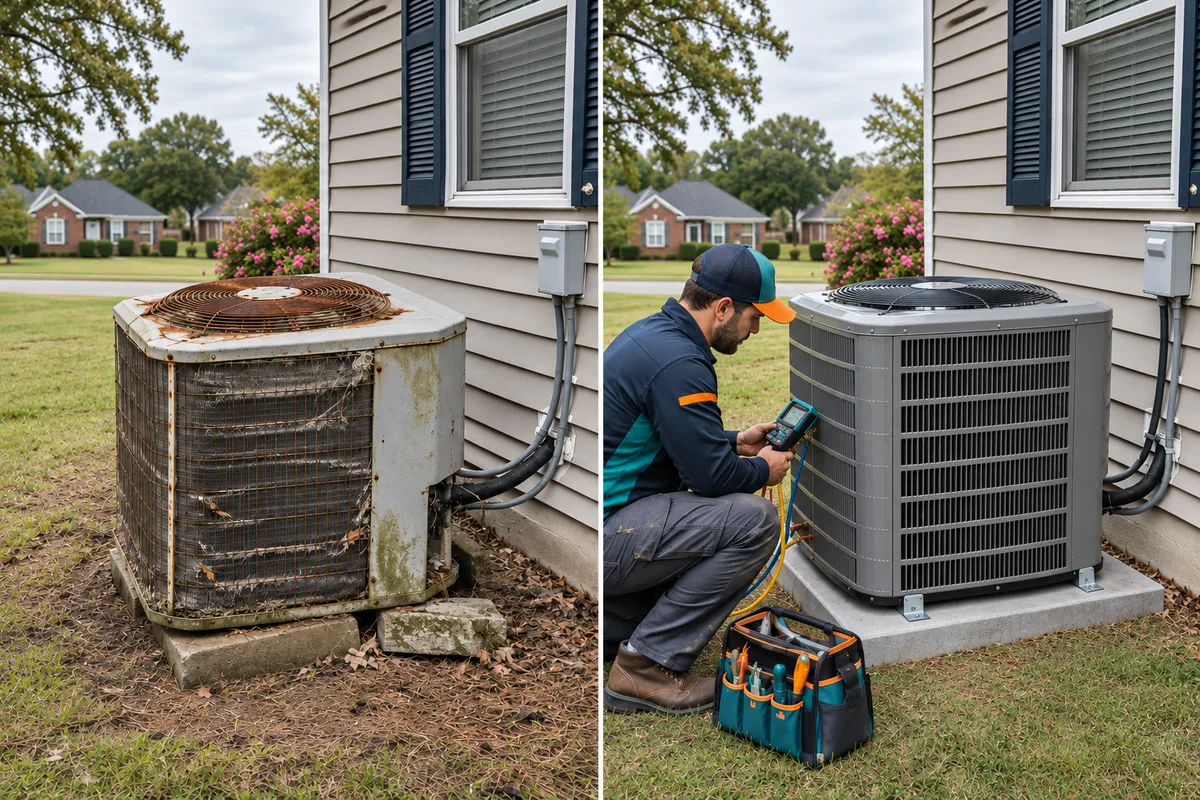
Replacement is worth considering when an aging system needs frequent work, uses an obsolete refrigerant, has a failed compressor, or can no longer keep the home comfortable. A high repair estimate may also justify comparing the cost and expected service life of new equipment. The decision should account for the indoor and outdoor units together because matched components are tested to operate as a system.
A replacement assessment should include the evaporator coil, condenser, air handler or furnace, thermostat, disconnect, overcurrent protection, condensate drain, equipment pad, and accessible ductwork. Existing refrigerant tubing may sometimes be reused if its diameter, condition, and manufacturer requirements are suitable. It must be inspected, cleaned as required, and pressure tested. New line sets are appropriate when compatibility or condition is uncertain.
Heat pumps are common choices in Alabama because one system can provide cooling and heating. Straight-cool air conditioners paired with a furnace or air handler may also fit the home. The right configuration depends on the existing system, available utilities, comfort goals, and budget.
From system selection through owner orientation
A Manual J load calculation evaluates heat gain and heat loss. The results guide system capacity, while efficiency ratings and staged or variable-capacity operation help narrow the equipment choices.
The installer checks supply and return paths, filter size, blower settings, static pressure concerns, and visible duct damage. Restricted airflow can reduce capacity and strain new equipment.
Connections are brazed using accepted practices, commonly with nitrogen flowing through the tubing to limit internal oxidation. The circuit is pressure tested and evacuated before refrigerant is released or weighed in.
The scope accounts for the disconnect, conductor and breaker compatibility, condensate disposal, drain traps when required, and overflow protection appropriate to the equipment location.
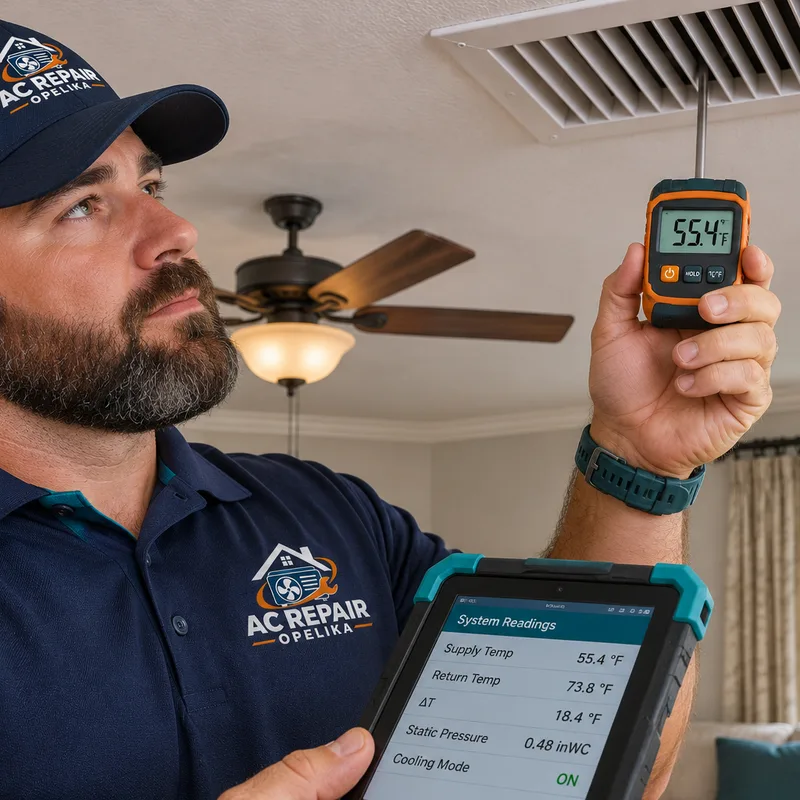
Commissioning includes operating checks, temperature measurements, airflow setup, thermostat testing, and refrigerant-charge verification by the method specified for the equipment and current conditions.
Before the job is complete, the homeowner should understand thermostat operation, filter access, maintenance needs, warranty registration responsibilities, and what normal operation sounds like.
From evaluation through final testing
We discuss comfort problems, inspect the existing system, review accessible ductwork, and gather the building details needed to estimate its heating and cooling load.
You receive equipment choices that fit the calculated load, existing infrastructure, efficiency goals, and budget. The written scope identifies included equipment and any known supporting work.
The old equipment is disconnected and removed when replacement is part of the work. The crew prepares the pad or mounting area, protects nearby surfaces, and addresses approved electrical, drain, or duct modifications.
The indoor and outdoor components, refrigerant circuit, controls, drainage, and electrical connections are installed according to manufacturer instructions and applicable requirements.
The system is started, configured, and checked under operating conditions. Final testing confirms that controls respond, air moves through the system, condensate drains, and the equipment completes a normal cycle.
Planning the investment
The cost depends on the equipment and installation requirements and is confirmed after an on-site evaluation.
Match capacity and operation to the building
Cooling equipment is rated by capacity, but capacity alone does not describe how well a system will perform in a particular house. Seasonal Energy Efficiency Ratio 2, or SEER2, describes seasonal cooling efficiency under the current test procedure. Energy Efficiency Ratio 2, or EER2, addresses performance at a defined high-temperature condition. These ratings help compare matched systems, but they do not correct poor sizing or restricted ductwork.
Humidity changes the comfort equation in East Alabama. Indoor air can feel uncomfortable at a lower thermostat setting when moisture remains high. Longer, controlled cycles generally support moisture removal better than short cycles from oversized equipment. Two-stage and variable-capacity systems can adjust output as conditions change, although a correctly selected single-stage system may still be a sound choice for many homes.
Local housing varies considerably. Homes near Opelika's historic core may have additions, altered return paths, or limited mechanical space that require careful field measurements. Newer subdivisions may have tighter construction and different load characteristics. Each building still needs an individual assessment because construction details matter more than age or ZIP code alone.
Compare scope as carefully as equipment
Two proposals can use similar capacity numbers while covering very different work. Compare the manufacturer and model numbers for both indoor and outdoor components, efficiency ratings for the matched combination, labor scope, thermostat, equipment pad, drain work, electrical allowances, disposal, permit responsibility, and warranty terms. Ask whether duct modifications and refrigerant tubing are included or treated as additional work.
A proposal should also explain why the recommended capacity fits the home. Replacing an existing unit with the same nominal tonnage is not proof that the old unit was sized correctly. Insulation upgrades, room additions, window changes, duct alterations, and long-standing comfort complaints may all affect the choice.
Warranty details deserve careful review. Manufacturer parts coverage and contractor labor coverage are different. Registration deadlines may apply, and maintenance records may be required under warranty terms. Keep the model numbers, serial numbers, installation records, and final scope together after the project is complete.
A new system is a long-term purchase. Get a written scope that identifies the equipment, supporting work, commissioning steps, and warranty terms before installation begins.
Call for a QuoteAnswers before you choose equipment
A straightforward residential changeout is often completed within one working day, while duct modifications, electrical upgrades, difficult access, or system redesign can extend the work. Humid Alabama weather also makes careful condensate setup and drainage testing especially important. The schedule should be confirmed after the existing equipment and installation area are inspected.
Both units generally should be replaced when a matched-system replacement is required for compatibility, rated efficiency, and warranty coverage. The evaporator coil, blower, metering device, condenser, and refrigerant must work together. Mixing an older indoor component with a new condenser can create performance, refrigerant, or manufacturer-approval problems.
The correct size is determined by a load calculation, not floor area alone. A Manual J assessment considers insulation, windows, orientation, air leakage, ceiling height, occupancy, and Opelika's regional design conditions. Duct capacity must also be checked because installing larger equipment on undersized ducts can create noise, weak performance, and high static pressure.
The better choice depends on the home's existing equipment, available energy source, electrical capacity, comfort preferences, and budget. A heat pump provides cooling and heating through the same refrigerant circuit, which can suit East Alabama's generally mild winter conditions. A straight-cool unit can be paired with an air handler and electric heat or with a furnace.
Existing ducts can remain if they are properly sized, reasonably tight, clean enough for continued use, and in serviceable condition. The return-air path and filter arrangement also need adequate capacity for the new blower. Visible damage, disconnected runs, crushed flexible duct, or excessive static pressure may require correction before the new equipment can perform as intended.
Permit and inspection requirements depend on the project's scope and the authority responsible for the property. Equipment replacement may involve mechanical and electrical requirements, particularly when circuits, disconnects, or service capacity change. The installation proposal should state who handles applicable permits and inspections before work starts.
Schedule replacement before an unreliable system fails during peak hot weather when possible. Planning ahead gives you time to compare matched equipment, review load calculations, and address duct or electrical needs without making a rushed decision. Spring and fall can offer more scheduling flexibility, but installation is available whenever replacement becomes necessary.
Tell AC Repair Opelika about your home, current equipment, and comfort concerns. We will assess the installation requirements and provide a clear recommendation for dependable cooling.