System Will Not Start
A failed capacitor, contactor, thermostat, disconnect, control board, or safety switch can prevent operation. Testing identifies whether the problem is in the controls, power circuit, or equipment.
Serving Opelika, Alabama & surrounding areas
HVAC repair service in Opelika
Get clear diagnostics and practical repairs that restore dependable heating or cooling without replacing parts that still work.
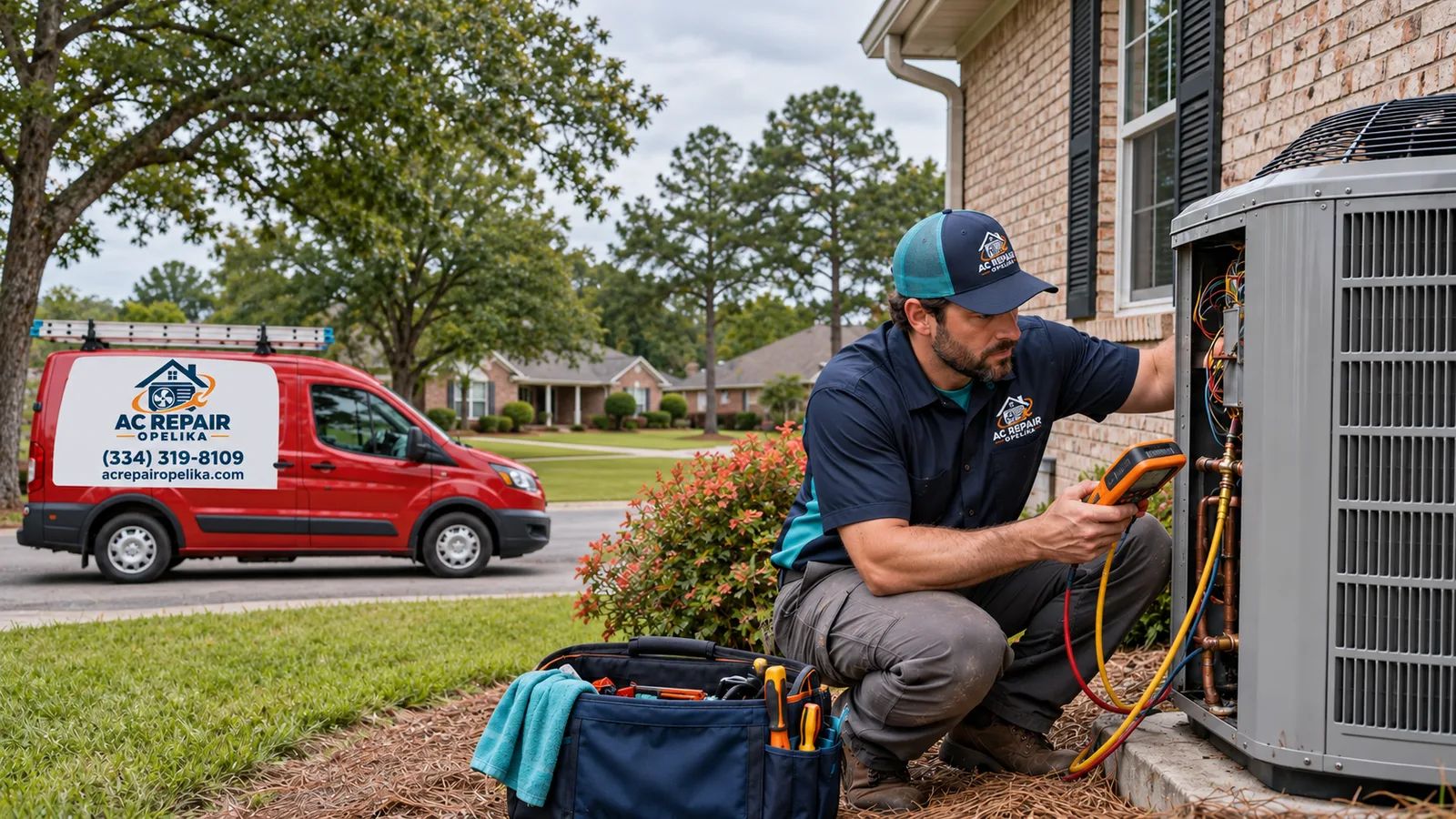
Heating and cooling faults are traced to their cause before repair work is recommended.
Find the fault before replacing parts
When indoor temperatures climb or the heat fails on a cold morning, HVAC repair in Opelika, AL starts with finding the actual fault. AC Repair Opelika checks the system as a whole before recommending work. That means reviewing thermostat operation, airflow, electrical components, refrigerant performance, drainage, and the condition of the indoor and outdoor equipment.
As a professional ac company in Opelika, we explain what failed, what can be repaired, and whether another issue is likely to affect the result. You receive a clear repair plan before work begins. If the equipment can be restored with a sound repair, there is no reason to push replacement. If age, condition, or repeated failures make a major repair difficult to justify, we explain that plainly as well.
Opelika's long periods of warm, humid weather place sustained demand on residential cooling systems. A weak capacitor, dirty evaporator coil, restricted filter, or struggling blower motor may first appear as longer cycles or uneven cooling. Addressing these symptoms early can prevent a minor fault from leaving the home without cooling during hotter weather.
Symptoms that need measured diagnosis
A failed capacitor, contactor, thermostat, disconnect, control board, or safety switch can prevent operation. Testing identifies whether the problem is in the controls, power circuit, or equipment.
Warm supply air may result from a refrigerant issue, compressor fault, dirty coil, restricted airflow, or incorrect thermostat setting. Pressures and temperatures must be evaluated together before drawing a conclusion.
Weak airflow can point to a clogged filter, dirty evaporator coil, blower problem, closed damper, or duct restriction. Airflow should be corrected before refrigerant performance is judged.
A blocked condensate drain, damaged drain pan, frozen coil, or failed condensate pump can cause water near the air handler. The moisture source must be corrected before it damages nearby materials.
Frequent starts and stops may involve overheating, low airflow, thermostat placement, electrical faults, refrigerant conditions, or oversized equipment. Repeated cycling also places extra strain on motors and compressors.
Grinding, rattling, buzzing, and burning odors call for prompt inspection. Loose panels, worn bearings, electrical arcing, debris, or a failing motor can produce distinct warning signs.
Testing matched to the equipment
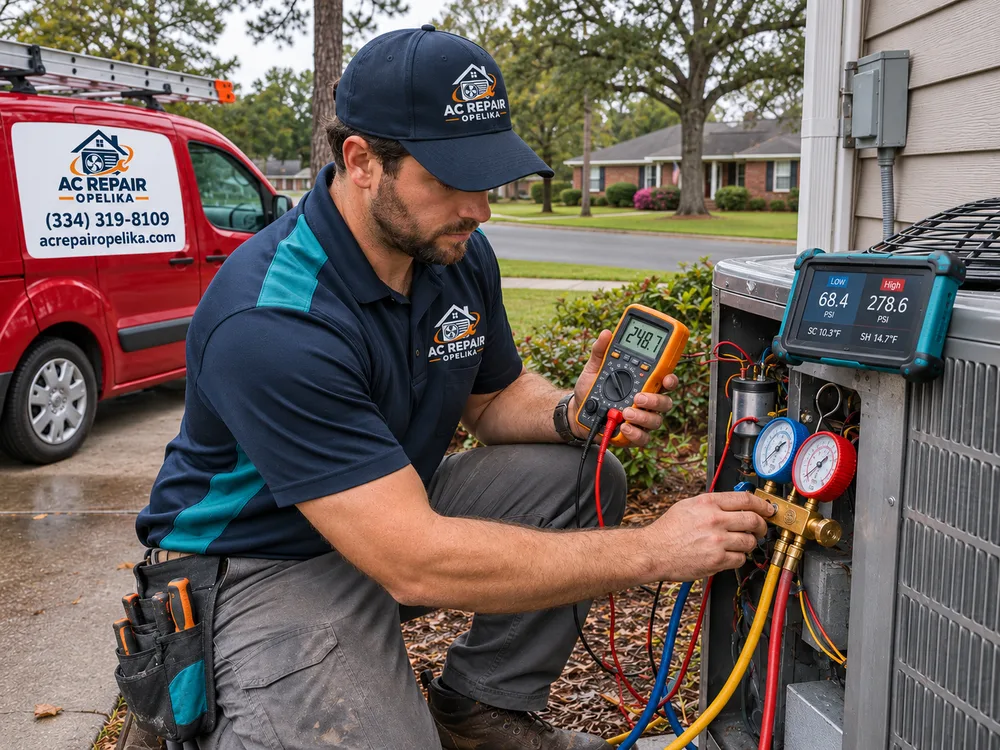
Reliable diagnosis depends on measurements rather than assumptions. A technician may inspect the air filter and blower assembly, verify voltage, test capacitors and contactors, check temperature change across the indoor coil, evaluate refrigerant pressures when warranted, and confirm that condensate drains correctly. The exact tests depend on the symptoms and equipment type.
For cooling equipment, refrigerant should not be added automatically because refrigerant is used in a closed system. Low charge can indicate a leak, and the repair decision should account for the leak location, equipment condition, and refrigerant type. Frozen coils also do not prove that refrigerant is low. Restricted airflow can produce similar symptoms.
Opelika homes may use split heat pumps, straight-cool systems paired with furnaces, or packaged equipment. Heat pumps need particular attention because the same refrigerant circuit provides cooling and heating. A reversing valve, defrost control, outdoor fan, or auxiliary heat fault can affect winter operation even when the system cooled normally during summer.
From reported symptoms to verified operation
We ask when the problem started, whether it is constant or intermittent, and what changed before the failure. Details such as unusual sounds, ice, water, odors, or a tripped breaker can help narrow the inspection.
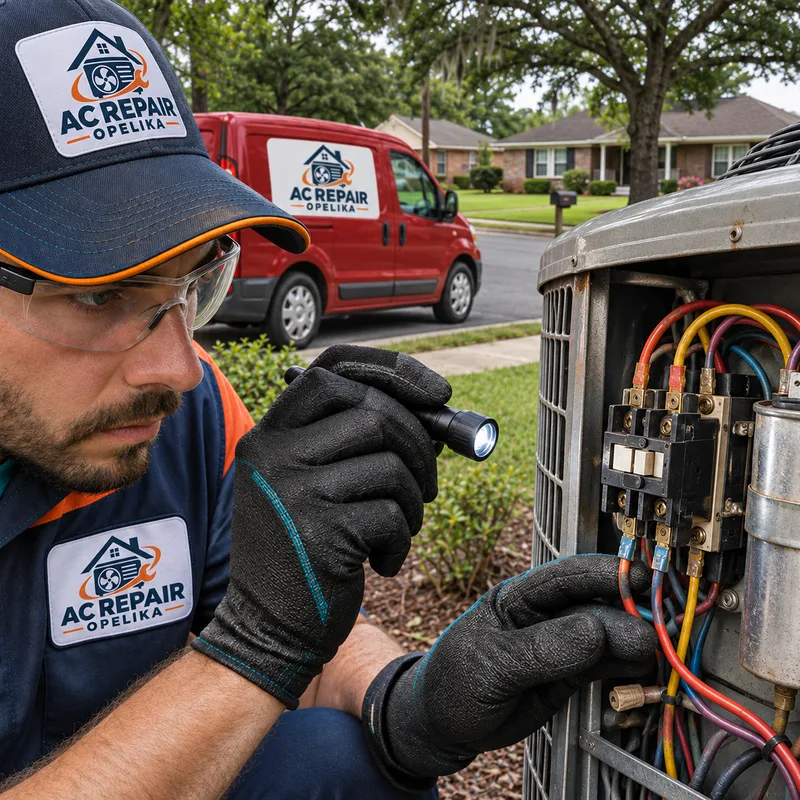
The technician checks the components related to the complaint and looks for conditions that contributed to the failure. Diagnostic work may include electrical readings, airflow checks, temperature measurements, and control testing.
You receive an explanation of the failed component, the proposed repair, and any condition that may limit the repair's value. Available choices are discussed before work proceeds.
The technician replaces or repairs the approved components, restores required connections, and addresses related issues included in the agreed scope.
After the repair, the system is run through an operating cycle. The technician confirms that controls respond, the equipment starts and stops correctly, and heating or cooling performance has improved as expected.
Planning for the repair
The cost depends on the fault and is confirmed after diagnosis.
Use the diagnosis to compare options
Repair is often reasonable when the fault is isolated, replacement parts are available, and the rest of the equipment is in serviceable condition. A failed capacitor, contactor, drain component, thermostat, or certain motors can often be addressed without replacing the whole system.
Replacement deserves consideration when a major component has failed and the equipment also has recurring problems, extensive corrosion, an obsolete refrigerant, or poor overall performance. The price of one repair should not be the only factor. Compare the repair with the system's condition, service history, parts availability, and likely near-term needs.
A diagnosis should separate a correctable failure from a broader equipment problem. AC Repair Opelika gives you the findings needed to make that decision without treating every breakdown as proof that a new system is required.
East Alabama's heat and humidity require an air conditioner to remove both sensible heat and indoor moisture. A system that runs but cannot control humidity may have low airflow, coil problems, control issues, incorrect setup, or equipment capacity concerns. Lowering the thermostat repeatedly does not correct the underlying condition.
Outdoor units also need room to reject heat. Grass clippings, leaves, and vegetation around the condenser can restrict airflow through the coil. Indoors, a heavily loaded filter can reduce airflow and contribute to coil icing or limit trips. Filters should be checked more often during periods of heavy use, but the correct replacement interval depends on filter type, household conditions, and system design.
For homes near Auburn University and other high-traffic parts of the Auburn-Opelika area, occupancy schedules and frequent thermostat changes can complicate intermittent complaints. In established residential areas near downtown Opelika, older equipment may also have prior wiring changes or mismatched components that need to be identified during diagnosis. These conditions do not determine the repair, but they help explain why a careful inspection matters.
If your system is blowing warm air, leaking water, cycling repeatedly, or refusing to start, arrange an inspection before continued operation causes additional damage.
Call for a QuoteAnswers before you schedule
Many common residential HVAC faults can be diagnosed during one service visit, although intermittent failures or parts that require further testing may take longer. The process usually starts with the thermostat, electrical supply, airflow, operating sequence, and components tied to the reported symptom. Parts availability and system access determine whether the repair can be completed during that same visit.
Yes, turn off cooling if the system is blowing warm air and you see ice, smell burning, hear severe mechanical noise, or notice the breaker tripping. Continued operation can worsen some motor, compressor, and electrical faults. If the outdoor unit is not running, the thermostat fan setting can make room-temperature air feel like a cooling failure, so set the fan to automatic and arrange diagnosis.
Water near an indoor unit commonly comes from a blocked condensate drain, frozen evaporator coil, damaged drain pan, disconnected drain line, or failed condensate pump. Opelika's humid cooling season can produce substantial condensate during normal operation, but that water should drain through the designed system. Shut the equipment off if water threatens ceilings, floors, or electrical components.
Many refrigerant leaks can be repaired, but suitability depends on the leak location, coil condition, refrigerant type, and equipment age. Refrigerant is not consumed during normal operation, so repeatedly adding charge without addressing a known leak is not a complete repair. Leak detection, repair access, and the value of the equipment should guide the decision.
A heat pump can cool normally yet fail in heating because of a reversing valve, defrost control, sensor, thermostat, auxiliary heat, or outdoor-unit fault. During cool, damp winter conditions in East Alabama, brief defrost cycles are normal. Persistent cold air, heavy ice that does not clear, or reliance on auxiliary heat warrants testing.
Provide the equipment type if known, the symptoms, when they began, and any recent breaker trips, filter changes, ice, water, odors, or unusual sounds. Mention whether the failure affects the whole home or particular rooms. Clear access to the thermostat, indoor equipment, electrical panel, and outdoor unit helps the technician inspect the system efficiently.
Tell AC Repair Opelika what your heating or cooling system is doing. We will inspect the equipment, explain the findings, and outline the repair options before approved work begins.