Air Conditioning Repair
Diagnosis and repair for systems that blow warm air, shut off unexpectedly, freeze at the indoor coil, leak condensate, or struggle to maintain the set temperature.
Serving Opelika, Alabama & surrounding areas
Heating and air service in Opelika
Practical residential HVAC service, with careful diagnosis, clear repair recommendations, and dependable help when indoor comfort slips.
Find the cause before replacing parts
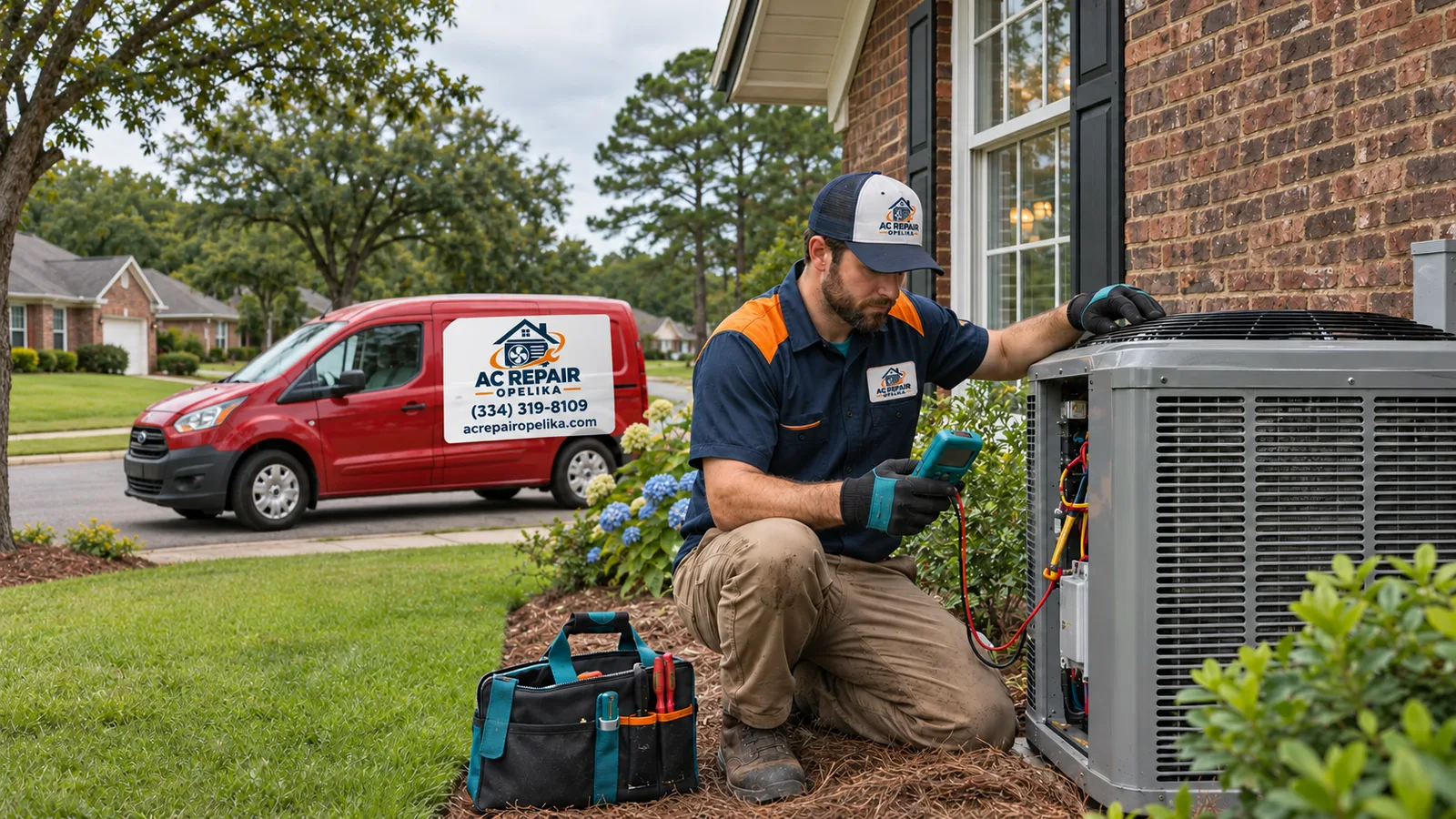
When you need heating and air Opelika AL service, the first priority is finding the actual cause of the problem. Weak airflow, short cycling, uneven temperatures, unusual sounds, and rising energy use can come from several faults. Replacing a part without checking the full system may leave the underlying issue unresolved.
AC Repair Opelika evaluates the equipment, thermostat, airflow, electrical components, and visible duct connections before recommending work. During every assessment, an experienced AC team in Opelika, AL explains what failed, what can be repaired, and when replacement deserves consideration. The goal is a sound decision based on system condition rather than a rushed sales pitch.
Opelika's hot, humid summers put sustained demand on air conditioners and heat pumps. Winter cold spells also expose weak ignitors, failing capacitors, worn motors, and heat pumps that do not change modes correctly. Timely service can restore comfort and reduce the strain caused by a system that keeps running without reaching the thermostat setting.
Complete comfort support
Diagnosis and repair for systems that blow warm air, shut off unexpectedly, freeze at the indoor coil, leak condensate, or struggle to maintain the set temperature.
Troubleshooting for furnaces, heat pumps, thermostats, auxiliary heat controls, blower assemblies, and other components that affect safe, steady heating.
Seasonal checks can identify dirty coils, restricted filters, loose electrical connections, blocked drains, weak capacitors, and other problems before peak weather increases demand.
When repair is no longer sensible, equipment selection should account for load, duct condition, efficiency rating, humidity control, installation requirements, and available space.
Room-to-room temperature differences may involve duct leakage, inadequate return air, closed dampers, insulation, equipment sizing, or a blower problem.
Diagnosis and repair for heat pumps that will not heat, ice over, run auxiliary heat constantly, or fail to switch between heating and cooling.
Test the full operating sequence
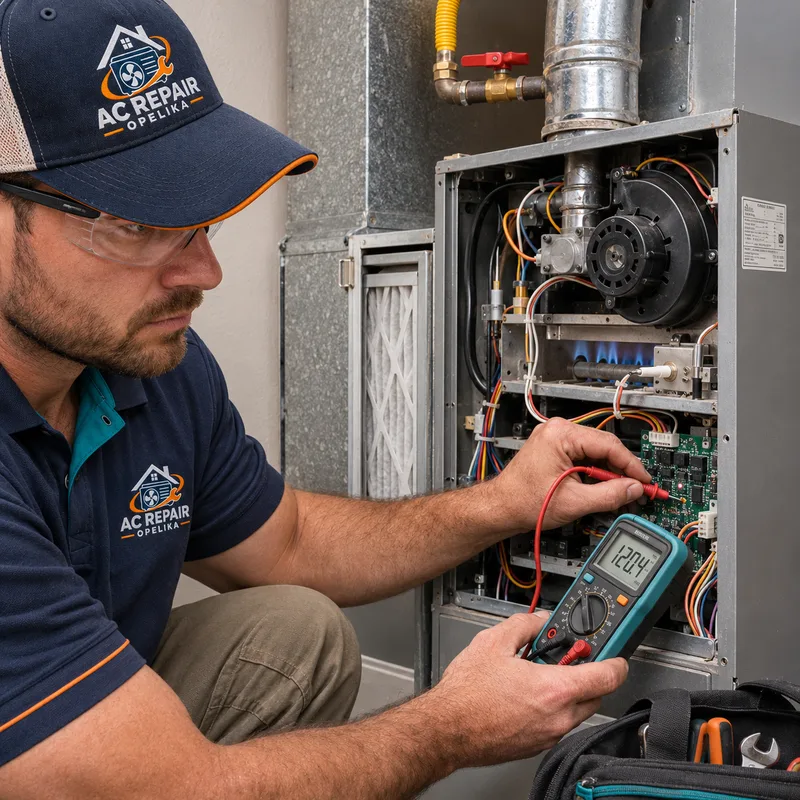
A heater that runs but does not warm the building needs more than a quick visual check. For a gas furnace, diagnosis may include the thermostat call, inducer motor, pressure switch, ignitor, flame sensor, burners, gas valve, limit controls, blower, venting, and filter. Combustion and venting concerns require particular care because they can affect safe operation.
Heat pump diagnosis follows a different path. The technician may check refrigerant temperatures and pressures, the reversing valve, outdoor fan, defrost controls, electrical components, indoor airflow, and auxiliary heat operation. A heat pump can appear to run normally while an electrical fault or airflow restriction keeps it from delivering enough heat.
The repair recommendation should identify the failed component and any condition that contributed to the failure. If a clogged filter caused a high-limit shutdown, for example, resetting the furnace without correcting airflow is incomplete work. AC Repair Opelika focuses on the full operating sequence so the proposed repair addresses the reason comfort was lost.
From symptoms to verified operation
Details such as when the problem started, whether it is intermittent, and which rooms feel different help narrow the diagnostic path.
The technician checks the thermostat, equipment condition, airflow, electrical readings, temperature change, safety controls, and other components relevant to the complaint.
You receive an explanation of the fault, the proposed work, and any condition that may affect the repair. When options exist, the practical differences should be clear.
After authorization, the repair is performed and the affected system functions are tested. Replacement work includes startup checks and confirmation that controls operate correctly.
The system is run through a heating or cooling cycle as conditions allow, and you receive guidance on filters, thermostat use, or follow-up work relevant to the equipment.
Compare the whole system condition
Repair is often reasonable when the problem is isolated, the heat exchanger is sound, needed parts are available, and the equipment otherwise operates reliably. A flame sensor, ignitor, capacitor, contactor, or thermostat fault does not automatically justify replacing the system.
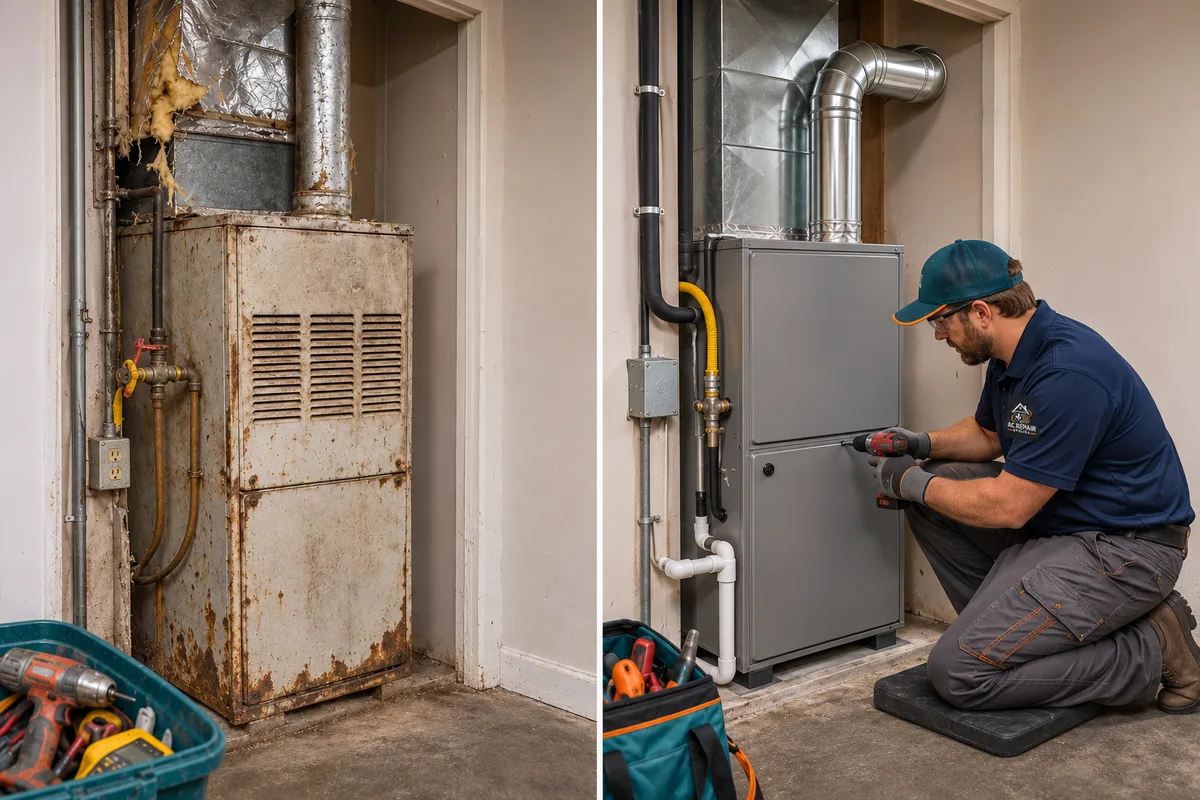
Replacement deserves consideration when a furnace has a damaged heat exchanger, repeated failures, extensive corrosion, unavailable parts, or repair needs that are hard to justify against its overall condition. Comfort problems caused by poor sizing or inadequate ductwork also may remain after another component repair. The right comparison includes the immediate repair, likely near-term needs, installation changes, and the expected use of the property.
A furnace replacement should not be selected by copying the old unit's capacity without review. Proper sizing relies on the building's heating load, while airflow must match the equipment and duct system. For heat pumps and air conditioners, sensible and latent cooling loads both matter in east Alabama's humid climate. Oversized equipment may satisfy the thermostat quickly while providing less effective moisture removal.
Comfort planning for East Alabama
Opelika includes older homes near the historic downtown district as well as newer residences around the city's expanding neighborhoods. Older structures may have limited mechanical space, additions served by altered ductwork, or electrical and venting conditions that need attention during equipment work. Newer construction can still have comfort issues when airflow balance, return capacity, thermostat placement, or installation setup is wrong.
Local cooling performance is closely tied to humidity control. An air conditioner removes moisture as air passes over a cold evaporator coil, but it needs proper airflow, refrigerant charge, drainage, and run time to do that effectively. A system that short cycles may leave the building cool but clammy. A dirty evaporator coil or restrictive filter can reduce airflow enough to cause icing and poor cooling.
For replacement equipment, efficiency labels are only part of the decision. SEER2 applies to cooling efficiency, while HSPF2 applies to heat pump heating efficiency and AFUE describes furnace fuel efficiency. Installation quality, correct sizing, duct condition, and control setup directly affect how the equipment performs in the building.
If your system cannot keep up, cycles repeatedly, or has stopped heating or cooling, arrange a professional diagnosis before the problem places more strain on the equipment.
Call for a QuoteAnswers before you schedule
Many common heating repairs can be completed during one service visit when the fault is clear and the required part is available. Intermittent electrical problems, refrigerant issues, obsolete controls, or repairs requiring specially ordered components can take longer. The technician must diagnose the system before giving a reliable completion schedule.
The cost depends on the fault and is confirmed after diagnosis.
Yes, stop operating the equipment if you smell gas, see smoke, hear abnormal combustion sounds, or suspect a serious electrical problem. Leave the building when a gas leak may be present and contact the appropriate emergency or utility service from a safe location. Alabama Power provides electricity in Opelika, while gas service and emergency procedures depend on the property's utility arrangement.
Heat pumps normally deliver air that feels milder than air from a gas furnace, but the building should still move toward the thermostat setting. Cool-feeling air combined with falling indoor temperature may point to a refrigerant, reversing-valve, defrost, airflow, thermostat, or auxiliary-heat problem. Opelika cold spells can make a fault in backup heat more noticeable.
Yes, many uneven-temperature problems can be diagnosed by checking supply airflow, return-air paths, duct leakage, dampers, filter restriction, equipment operation, and thermostat location. Building additions and altered room layouts can also affect air distribution. Testing is needed before assuming that larger equipment will solve the problem.
A heating and cooling system generally benefits from professional maintenance before its heavy-use seasons, with filter checks performed more often according to the filter type and building conditions. In Opelika, cooling equipment faces prolonged summer heat and humidity, so clean coils, open drains, sound electrical connections, and correct airflow deserve attention before sustained cooling demand.
Consider replacement when equipment has a serious safety defect, needs repeated repairs, uses unavailable parts, or no longer provides acceptable comfort despite correct maintenance and repair. A sound recommendation also considers ductwork, load calculation, electrical service, venting, and humidity control. Age alone does not prove that replacement is required.
Tell AC Repair Opelika what the system is doing, when the trouble began, and whether comfort has been lost throughout the property or only in certain rooms. A careful diagnosis provides a clear basis for the next step.