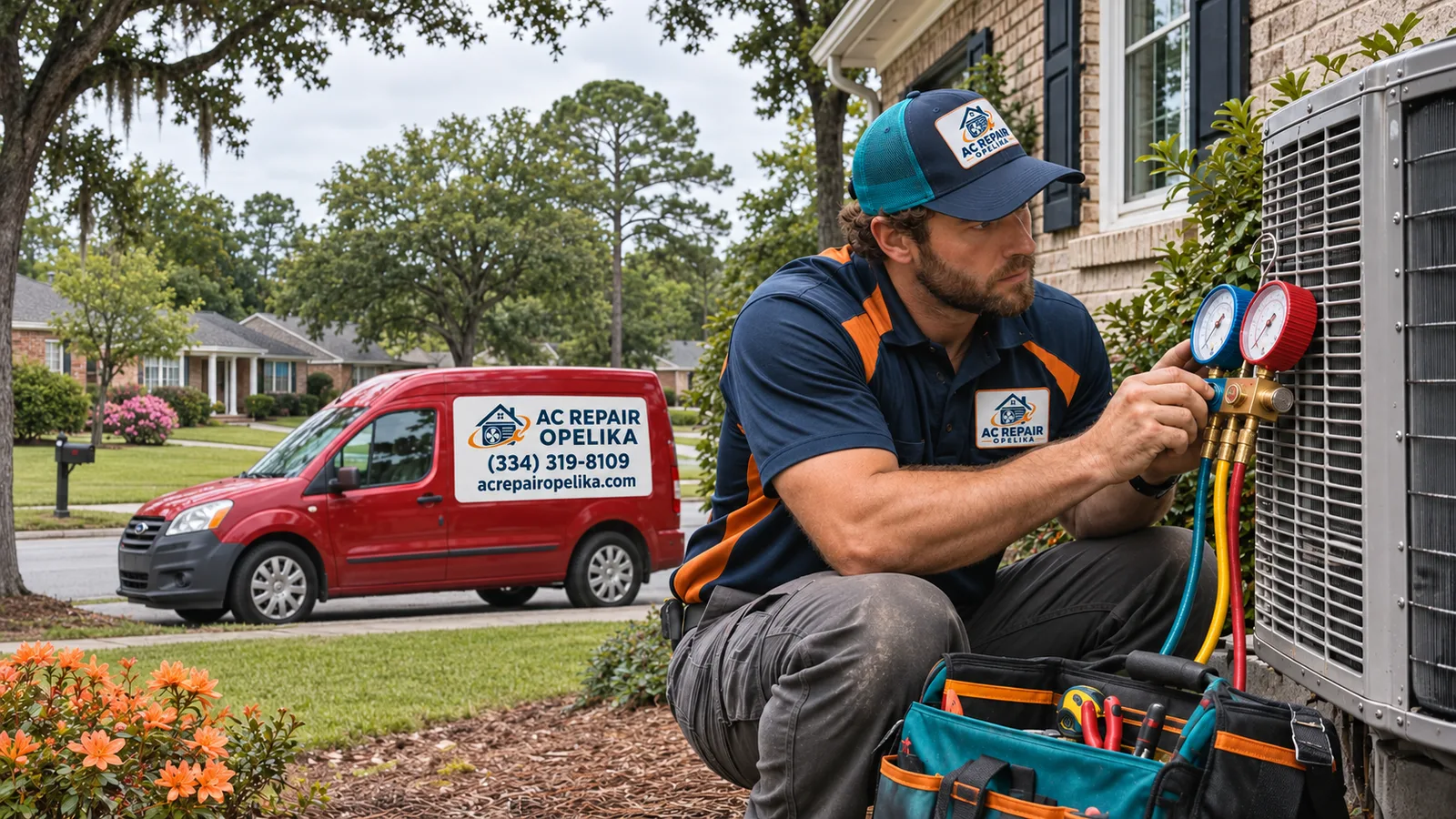
A dependable diagnosis starts with the complaint: no cooling, warm air, short cycling, water around the indoor unit, unusual noise, weak airflow, or a system that will not start. The technician then checks the controls and verifies what the equipment is doing under operating conditions.
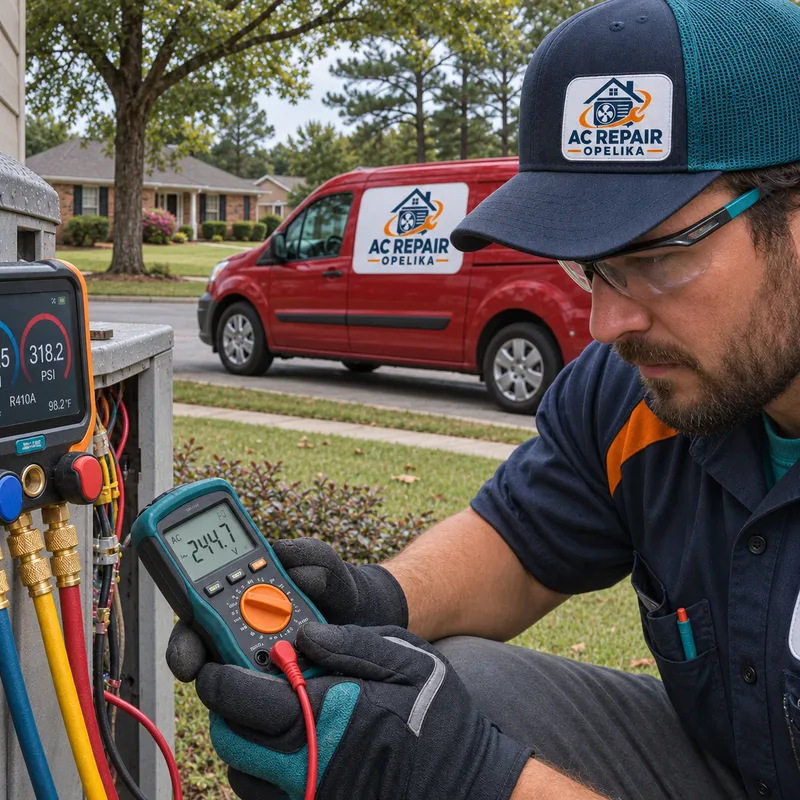
Depending on the symptoms, testing may include supply and return air temperatures, electrical voltage and amperage, capacitor readings, refrigerant pressures, coil condition, condensate drainage, blower operation, and accessible ductwork. Refrigerant should not be added automatically. Low charge usually indicates a leak or another condition that needs investigation.
For heat pumps, the inspection may also cover the reversing valve, auxiliary heat, outdoor temperature controls, and defrost operation. For gas heating equipment, combustion and safety components require careful attention. You should receive a plain explanation of the findings, the proposed work, and whether the repair is likely to be sensible given the system's condition.